Why Perfume Smells Different in the Bottle vs on Skin.
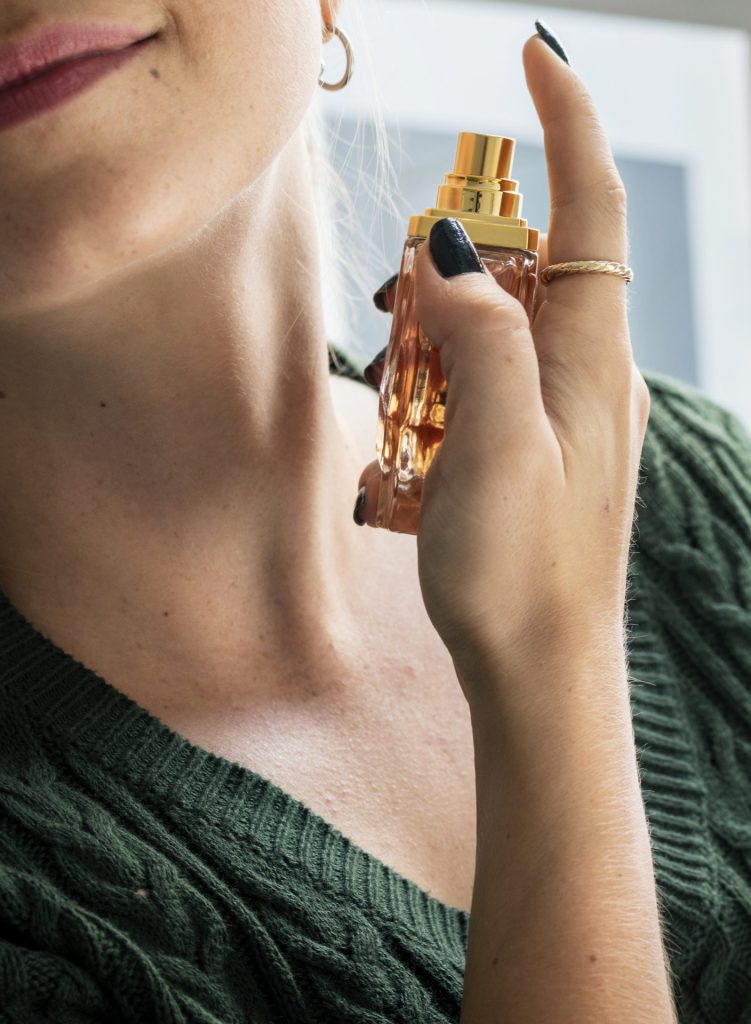
Image by rawpixel.com
We bet you’ve had this experience where you smell a perfume on a card in a shop, or directly from the bottle, and it’s lovely.
So, you buy it and spray it on, but it smells noticeably different, sometimes better and sometimes worse. Occasionally, it’s so different you wonder if you picked up the wrong thing.
No, it’s not your imagination and it’s not a bad batch. There are several very good reasons why perfume behaves differently once it meets your skin, and understanding them makes buying fragrance a lot less frustrating. So keep reading to learn more.
What You’re Smelling in the Bottle
When you smell a fragrance directly from the bottle or on a paper test strip, you’re getting a concentrated hit of the top notes, which are the lightest, most volatile molecules in the formula that evaporate quickest. These are typically the bright, sharp, immediately appealing elements: citrus, green notes, light florals, ozonic accords. They’re designed to make a strong first impression, but they’re also the most fleeting part of a fragrance and not particularly representative of what it will smell like once you’re wearing it.
On a cold strip with no heat or skin chemistry involved, the heavier base notes have very little reason to lift off and reach your nose. So what you get is a somewhat one-dimensional version of the fragrance that skews heavily towards whatever is sitting at the top.
What Heat Does
Skin changes everything because it is warm.
Heat causes fragrance molecules to evaporate and diffuse into the air, which is how scent actually reaches your nose. When you apply perfume to your wrists or neck, your body temperature acts as a gentle diffuser, gradually releasing different layers of the fragrance as time passes.
A fragrance typically moves through three stages on the skin:
- Top notes (0–30 minutes) – the first impression. Usually bright and fresh: citrus, green notes, light herbs. These smell great but fade quickly and are the least representative of the fragrance as a whole.
- Heart notes (30 minutes–3 hours) – a true character of the scent. This is where the main floral, spicy, or fruity elements come through and where most people either fall in love with a fragrance or decide it’s not for them.
- Base notes (3 hours onwards) – this is the foundation that’s left when everything lighter has faded. Musks, woods, ambers and resins. These are the warmest and richest elements, giving a fragrance its longevity and depth.
Skin Chemistry and How a Perfume Smells
As well as temperature, your individual skin chemistry has a role in how a fragrance smells on you specifically.
The pH of your skin, how oily or dry it is, your diet, your hormones and even the products you use can all affect how fragrance molecules interact with and develop on your body.
This is why the same perfume can smell quite different on two different people. On one person, a rose fragrance might skew powdery and warm, but on another, the same formula might come across fresher and greener. Neither is wrong, it’s just chemistry. Another way a scent smells different is pheromone perfume, which develops to enhance your own aroma, which is attractive and exciting.
Dry skin in particular tends to hold fragrance less well than oily skin, because the fragrance has less to bind to. If you find perfumes fade quickly on you, applying an unscented moisturiser before your fragrance can make a noticeable difference.
The Alcohol Factor
Most fragrances are suspended in alcohol, which serves as a carrier and helps project the scent. When you smell from the bottle or immediately after spraying, the alcohol adds a sharp, slightly harsh quality to the top notes that can make a fragrance smell stronger and more astringent than it actually is. Within a minute or two of application, the alcohol evaporates and the fragrance settles properly into the skin. Many people find they much prefer a fragrance about five minutes after applying it for exactly this reason. If your first reaction to a new perfume is that it’s a bit much, give it a few minutes before making a final call.
How to Test a Fragrance Properly
A few things worth knowing before you buy:
- Always test on skin, not just a paper strip
- Spray or dab on your inner wrist and wait at least 15–20 minutes before deciding
- Test no more than two or three fragrances on skin at once, scent fatigue sets in quickly and your nose will struggle to distinguish between them
- Try it again on a different day if you’re unsure, because temperature, diet and skin condition all affect how a fragrance performs
- The heart notes, not the top notes, are what you’ll be wearing most of the day, so those are what matter most
The Bottle is Just the Beginning
Perfume is not a fixed thing you spray on and that’s that.
It’s a formula that reacts to your body heat, your skin chemistry and time, which means what ends up on you is genuinely personal in a way that most products aren’t. What you smell in the shop is a very early preview and not a particularly representative one at that.
Taking the time to test properly, on your skin, in the right conditions and with enough patience to let it develop, is the single best thing you can do to avoid buying something you end up not loving.
Once you understand how fragrance actually works, it starts to make a lot more sense why two people can wear the same perfume and come away smelling completely different.